Dive Brief:
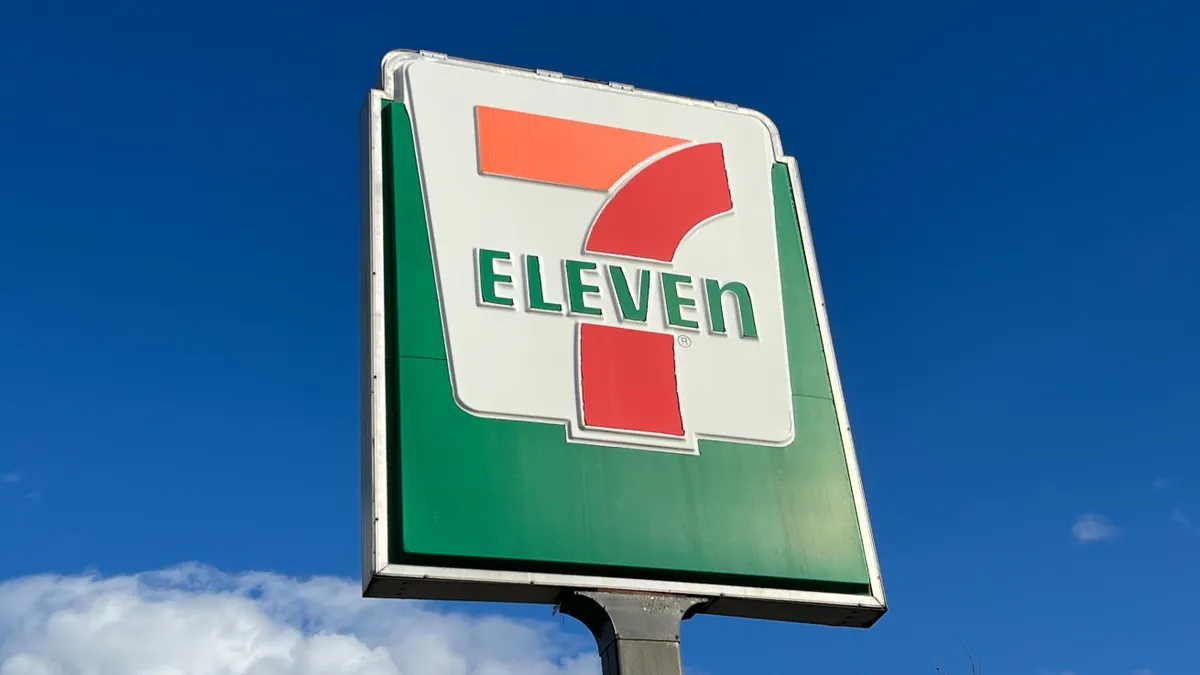
- 7-Eleven is laying off an undisclosed number of employees as the convenience retailer undergoes a company-wide reorganization as part of its transformation plan, a spokesperson confirmed to C-Store Dive on Thursday.
- 7-Eleven’s spokesperson said in a statement that the restructuring is the result of the retailer “streamlining our organization and aligning our operating model with our strategic priorities to enable faster, more disciplined execution.” While they did not share the number of employees impacted, the restructuring affects individuals across several departments, including some in leadership positions, according to four team members who have been let go in the past week.
- The reorganization continues a difficult period for 7-Eleven, which continues to see financial declines as it delays its North America IPO and prepares to close several hundred locations in the current fiscal year.
Dive Insight:
In their statement, 7-Eleven’s spokesperson said that the company’s transformation plan aims to give the retailer “a stronger, more consistent and more competitive business, focused on delivering a seamless, high-quality customer experience across every touchpoint including value, quality fresh food and digital convenience.”
That strategic shift, which includes opening larger, food-focused convenience stores and expanding its private-label assortment to improve its reputation as a food business in the U.S., has been ongoing since late 2024.
However, it’s not clear how this latest reorganization, which appears to have begun late last week, fits into 7-Eleven’s plan. In recent days, dozens of 7-Eleven employees, from senior directors to those in field operations and merchandising, have posted to LinkedIn that their time with the convenience retailer has ended.
“While this reorganization required the company to make difficult decisions, it also created opportunities for people to step into new roles,” 7-Eleven’s spokesperson said in a statement. “Throughout this process, our primary focus remains on our employees handling these transitions with the [utmost] respect and care.”
A significant new element to 7-Eleven’s transformation plan is its dwindling company-operated convenience store network in North America.
During the company’s earnings presentation earlier this month, company leaders outlined plans to convert about 2,600 company-operated stores to franchised locations through 2030. Additionally, the retailer plans to shift select company-operated c-stores to wholesale locations as a cost-cutting measure, further lessening the number of stores the retailer controls. As 7-Eleven pursues its cost savings and store-growth strategy, it’s also in the process of remodeling over 7,000 locations in North America through 2030.
The latest restructuring comes just a few weeks after 7-Eleven pushed back its planned IPO to at least fiscal 2027 due to economic uncertainty. Also earlier this month, parent company Seven & i quietly disclosed plans to close 645 7-Eleven stores in North America in fiscal 2026 — roughly 400 more locations than it expects to open. 7-Eleven’s leadership has emphasized that most of these closures will come as a result of its wholesale conversion strategy.